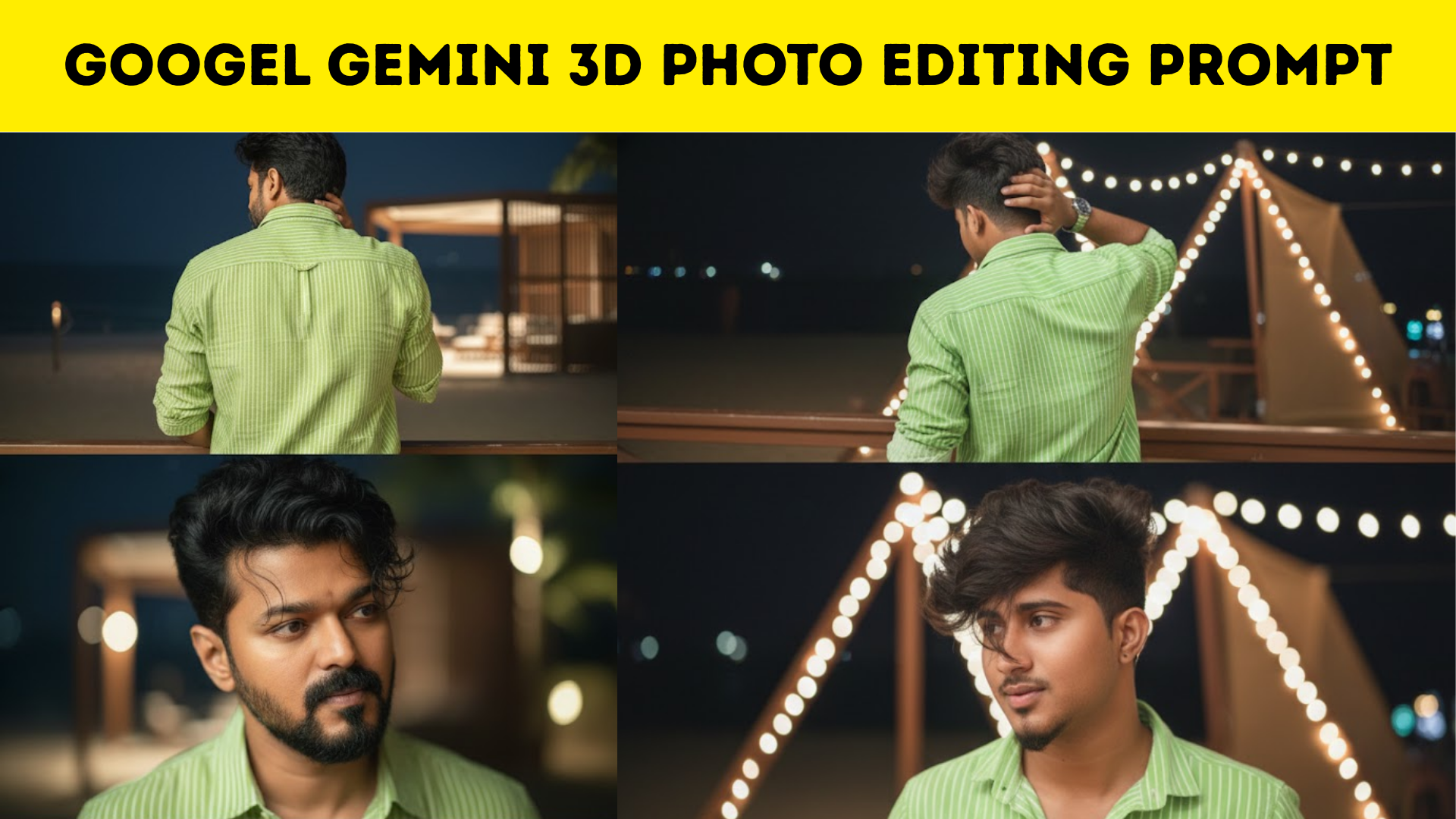
Introduction to AI 3D Photo Editing
AI 3D photo editing is changing the way people create and enhance images in today’s digital world. Unlike traditional editing that only adjusts brightness, contrast, or color, AI 3D editing adds depth, realism, and cinematic effects to photos. With artificial intelligence analyzing facial structure, lighting, and background, users can convert normal photos into stunning 3D-style images within seconds. This technology is becoming popular among social media creators, photographers, and casual users who want professional-looking edits without advanced design skills.
How AI Works in 3D Photo Editing
Artificial Intelligence uses deep learning models to understand image layers, objects, and facial features. It scans the photo and separates the subject from the background, then adds depth mapping to create a 3D illusion. AI can also predict lighting direction and shadow placement, making the final image look natural. Because of machine learning, these tools keep improving, meaning the more they are used, the better results they produce over time.
Why AI 3D Editing is Trending
AI 3D photo editing is trending mainly because of social media platforms. People want unique profile pictures, reels, and posts that stand out. 3D images give a cinematic and premium feel compared to normal photos. Influencers and content creators use these effects to gain more engagement. The technology is also becoming easier to use, with many mobile apps offering one-click 3D editing options.
Popular Uses of AI 3D Photo Editing
Many people use AI 3D editing for profile photos, wedding pictures, and promotional content. Businesses use it for marketing banners and product showcases. Gamers and digital artists also use AI 3D tools to create avatars and virtual characters. The technology is not limited to professionals anymore; even beginners can create studio-quality edits using AI-powered apps.
Benefits of Using AI 3D Editing Tools
One of the biggest advantages is time saving. What once required hours in professional software can now be done in seconds. AI tools also reduce the need for expensive editing software and high-level skills. They provide automatic face enhancement, background blur, depth effect, and lighting correction. This makes high-quality editing accessible to everyone.
Challenges and Limitations
Even though AI 3D editing is powerful, it is not perfect. Sometimes AI may misread image depth or distort edges. Low-quality photos may not produce good 3D results. Some advanced features are locked behind paid subscriptions. Privacy is also a concern because some apps store uploaded images on cloud servers.
Best Features to Look for in AI 3D Editing Apps
Good AI 3D editing apps should have automatic depth detection, realistic lighting adjustment, and background replacement. Fast processing speed is important for smooth editing. High-resolution export options ensure quality output. User-friendly interface is also necessary, especially for beginners who want quick results without complex settings.
AI 3D Editing for Social Media Growth
AI 3D images help attract more likes and followers. Unique visuals increase user engagement and make content more shareable. Many creators use AI 3D effects for Instagram posts, YouTube thumbnails, and WhatsApp profile pictures. Eye-catching visuals help build personal branding and online presence.
Future of AI 3D Photo Editing
The future looks very advanced. Soon, AI may create full 3D models from single photos. Real-time 3D editing during video recording may become common. Integration with AR and VR technology will make digital content more immersive. AI may also automatically suggest the best editing style based on user preferences.
PROMPT :-
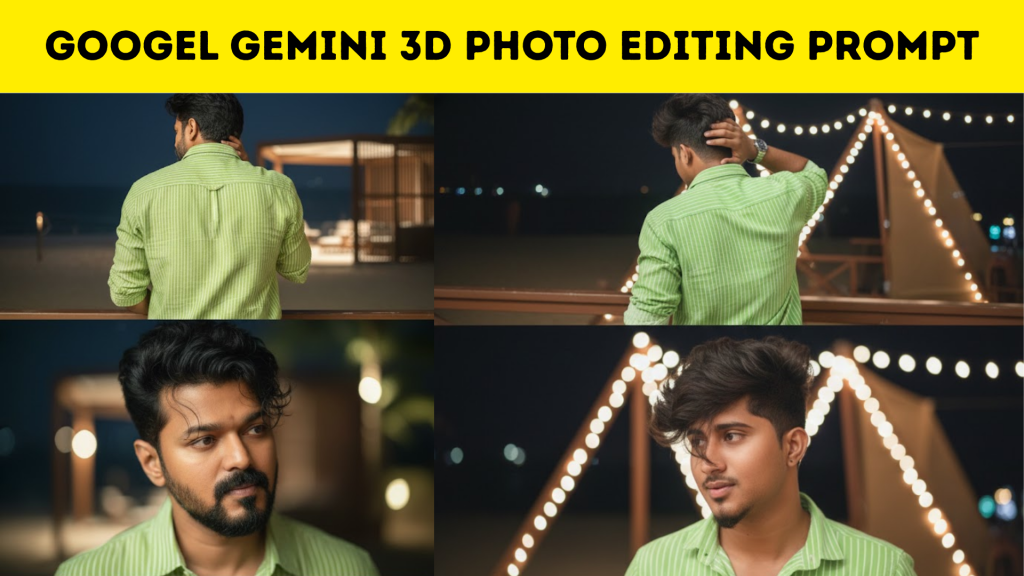
Use the uploaded reference photo as the single and exclusive facial identity source. The same exact face must appear in ALL three frames with no variation. Do not reinterpret, regenerate, beautify, or modify the face between frames. Facial identity has highest priority over lighting, angle, blur, or realism. Ultra-realistic vertical image split equally into three stacked frames (top / middle / bottom) within one single photo. All frames show the same person with the same face, same outfit, same location, captured seconds apart like a burst of candid smartphone shots. Only subtle movement changes. Feels accidental, real, and human. Location & background: Open beach night at a modern resort outdoors at night. Wooden tent in background, Warm lights glowing softly near the tent. Dark night sky visible. Beachy atmosphere. Real, moment — not staged. Outfit (locked): Lime green vertically striped button-down shirt, top buttons open showing slight chest. Full Sleeves rolled to forearms. High-waisted cream tailored trousers. Metal wristwatch on one wrist. No jacket, no accessories beyond the watch. Hair & Face (LOCKED) Medium-length, thick, naturally wavy hair Slightly messy, lived-in texture Light stubble / short beard Real skin texture, visible pores No smoothing, no beautification FRAME BREAKDOWN (VERY IMPORTANT) TOP FRAME — BACK SHOT Back view of the subject. He is touching the back of his hair near the neck, fingers slightly tangled in hair. Head tilted slightly down and to the side. Relaxed posture, candid movement. Hair texture clearly visible from behind. MIDDLE FRAME — CLOSE-UP Tight close-up near the eyes and upper face. Messy strands of hair falling naturally near the eyes. Eyes partially visible, soft focus. Very slight motion softness from movement. Feels intimate, accidental, not posed. BOTTOM FRAME — MID SHOT Mid-shot from waist or chest up. Subject leaning casually against the railing. Looking sideways, not at the camera. Expression calm, confident, contemplative. Natural posture, effortless presence. Lighting (LOCKED) Warm artificial wall lighting mixed with cool night ambient light. Soft illumination on face and shirt. Background slightly darker. No flash. No dramatic contrast. Camera Feel (LOCKED) Handheld smartphone photo No portrait mode No background blur Slight shake, mild softness Natural low-light noise Imperfect framing Overall Mood Effortless elegance. Quiet confidence. Modern masculine. Looks like three moments caught naturally within seconds, not a styled shoot. Feels real, human, Pinterest-worthy, and believable. Negative Prompt studio lighting, cinematic grading, flash, portrait blur, beauty filter, smooth skin, over-sharp, CGI, AI look, fake background, posed fashion shoot.
Tips for Getting Best AI 3D Editing Results
Always use high-quality images with good lighting. Avoid blurry or low-resolution photos. Choose apps that allow manual adjustment after AI processing. Try different 3D styles to see what suits your photo best. Keeping the original photo saved is important in case you want to re-edit later.
AI 3D photo editing is revolutionizing digital photography and content creation. It makes professional-level editing simple and accessible to everyone. With continuous improvements in artificial intelligence, 3D photo editing will become even more realistic and powerful in the coming years. Whether you are a content creator, photographer, or casual social media user, AI 3D editing offers exciting creative possibilities.