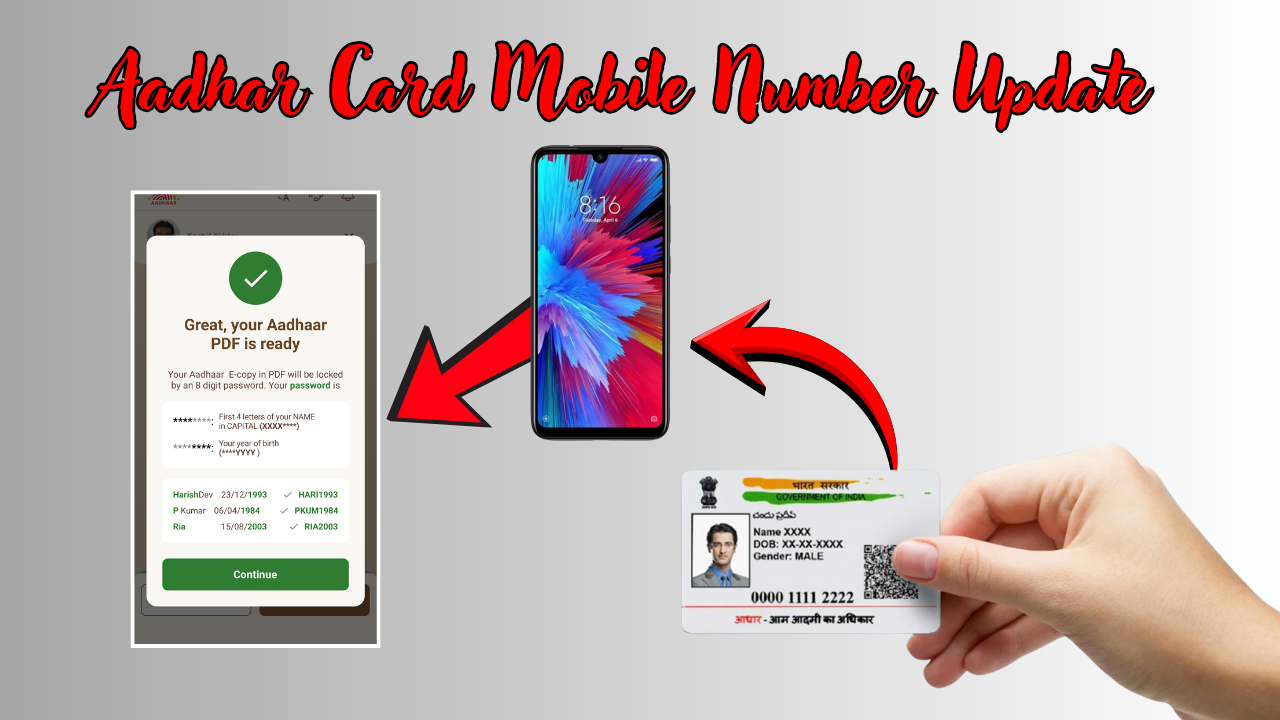
Understanding Aadhaar
Aadhaar is a unique identification system introduced by the Government of India to provide every resident with a 12-digit unique number. It serves as a centralized identity proof and simplifies access to various government and private services. Over the years, Aadhaar has become an essential part of daily life, helping individuals verify their identity quickly and securely.
Purpose of Aadhaar
The main purpose of Aadhaar is to create a single, verifiable identity for all residents of India. It allows the government to deliver services more efficiently and ensures that benefits reach the intended individuals. Aadhaar helps in eliminating duplicate and fake identities, making public services more transparent and accountable.
Importance of Aadhaar in Daily Life
Aadhaar is required in many important activities such as opening a bank account, applying for a mobile SIM card, and accessing various welfare schemes. It also acts as a reliable identity proof across public and private institutions. With Aadhaar becoming widely accepted, individuals can verify their identity seamlessly without the need for multiple documents.
Aadhaar Enrolment Process
The enrolment process for Aadhaar is simple and free of cost. Individuals can visit the nearest Aadhaar Seva Kendra with basic identity and address documents. At the center, biometric data such as fingerprints, iris scans, and photographs are captured. Once the enrolment is completed, the details are verified, and the Aadhaar number is generated and delivered to the resident.
Updating Aadhaar Details
Aadhaar information can be updated if there are changes or mistakes in the original data. Residents can update details such as name, address, date of birth, and mobile number. Updates can be done online for certain fields or by visiting an Aadhaar center for biometric and other sensitive updates. Keeping Aadhaar details accurate ensures smooth verification whenever needed.
Security Features of Aadhaar
Aadhaar includes advanced security measures to keep residents’ information safe. Biometric authentication ensures that identity verification is accurate and prevents misuse. The UIDAI continuously upgrades the security architecture to protect personal data from unauthorized access. Residents also have control over how their Aadhaar is used, adding an extra layer of protection.
Aadhaar and Government Services
Several government welfare schemes are linked with Aadhaar to ensure proper delivery of benefits. Subsidies for LPG, pensions, scholarships, and public distribution system benefits are often credited directly to the Aadhaar-linked bank accounts. This integration reduces fraud and ensures transparency in public welfare distribution.
Aadhaar in Banking and Finance
Banks and financial institutions use Aadhaar for quick and easy customer verification. Aadhaar-based e-KYC has made opening bank accounts and availing digital financial services faster than before. Aadhaar also helps in seamless transfer of government subsidies to the beneficiary’s account without delays.
Aadhaar and Digital India
Aadhaar plays a key role in the Digital India initiative by enabling digital identity verification. It supports online services such as e-KYC, e-sign, and digital payments. Aadhaar authentication allows individuals to access many government services digitally, reducing paperwork and saving time.
Challenges Related to Aadhaar
Although Aadhaar has many benefits, it faces challenges related to privacy concerns and technical errors. Some individuals may experience issues with biometric authentication or delayed updates. The government continues to work on improving the system to make it more reliable and user-friendly.
Aadhaar for Children
Aadhaar enrolment is available for children as well. Kids below five years get Aadhaar without biometrics, and their details must be updated once they turn five and again at fifteen. Having Aadhaar helps children access school admissions, scholarships, and healthcare services smoothly.
Virtual ID for Aadhaar
To enhance privacy, residents can generate a Virtual ID, which is a temporary 16-digit number used instead of the actual Aadhaar number. This helps protect personal details during authentication and provides added security. The Virtual ID can be generated or changed anytime through the UIDAI portal.
Future of Aadhaar
Aadhaar continues to expand its role with new digital services and technological upgrades. As India moves toward a fully digital ecosystem, Aadhaar will remain a key component in identity verification. Its continuous improvement aims to provide even greater convenience, security, and accessibility for residents.